

- Vitalik Buterin believes that advanced AI will improve cybersecurity through formal verification.
- Ethereum uses AI agents to detect software vulnerabilities.
- Anthropic has observed increased AI capacity in offensive cybersecurity tactics.
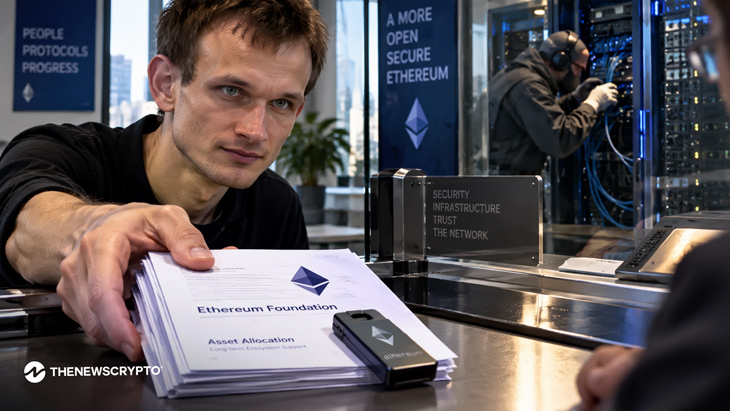
Vitalik Buterin dismissed all allegations concerning the ability of AI hackers to render cybersecurity indefensible due to advancements in artificial intelligence technology. Buterin said that AI could help improve the cybersecurity system by means of formal verification. This involves using mathematical proofs to assess the security properties of software. However, Buterin admitted that verification could not safeguard the system from bugs that developers had omitted in their specifications. In a similar manner, Ethereum has emphasized the necessity of comprehensive security specifications. Moreover, Buterin has indicated that about 90 percent of his net worth is in cryptocurrencies.
It's an increasingly common take that AI hacking means cybersecurity is doomed.
— vitalik.eth (@VitalikButerin) September 16, 2026
I disagree. I think cybersecurity is naturally defense-favoring once people get their shit together. And anyone who continues to hold cryptocurrency (including me, ~90% of my net worth) is implicitly…
Combining AI with Security Research Has Become Routine for Ethereum
AI agents are already used by Ethereum scientists to analyze the protocol code and reproduce vulnerabilities on their own. The Foundation announced that coordinated AI agents helped detect actual vulnerabilities in the process of conducting security research. In one case, it was a remotely exploitable crash of Rust libp2p’s Gossipsub networking protocol.
It was disclosed as CVE-2026-34219 after being independently reproduced by researchers. Meanwhile, Ethereum scientists continue developing formal verification in several protocol development projects. The better.codes project of the Foundation also uses AI agents together with machine-checkable proofs in Lean. More generally, the Ethereum roadmap covers formal verification together with privacy, zero-knowledge systems, and post-quantum security research.
AI Enhances Offensive Cyber Operations Too
According to Anthropic’s September threat report, attackers have been leveraging AI in various stages of their operations. These stages included vulnerability research, exploitation, and data analysis. Moreover, the firm reported automated techniques utilized in attacks on government agencies, tech companies, and other infrastructure.
It was stated by Anthropic that AI is capable of performing complex tasks that would otherwise require specialized human teams to perform. At the same time, Anthropic has used AI models to find vulnerabilities in open-source projects. Hence, the use of AI has shown its expanding capabilities in both offensive and defensive operations. Buterin makes his argument based on whether AI-based verification can offer stronger defenses against advanced attacks. Research into Ethereum offers a practical venue for testing such approaches. The question remains about how far AI verification of components can be expanded into verification of entire digital systems.
Highlighted Crypto News:
Revolut Hackers Demand $3M in Monero, Threaten to Sell 680 Customer Files