

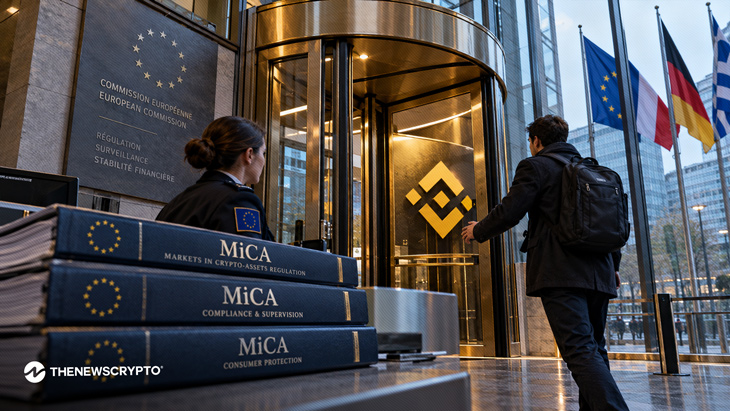
- EU regulators are examining Binance’s use of MiCA’s reverse solicitation exemption to determine whether its current approach complies with the framework.
- The review follows Binance’s failure to secure a MiCA license, raising questions over its continued EU operations after the July 1 transition deadline.
Binance is facing regulatory scrutiny across Europe over its use of MiCA’s reverse solicitation exemption, a legal provision that allows non-EU companies to serve European clients, but only when those clients independently seek out the relationship without any solicitation or marketing from the firm.
The European Securities and Markets Authority, alongside national regulators in France, Germany, and Greece, is now examining whether Binance’s current service model genuinely meets those conditions.
Significantly, the review follows Binance’s failure to secure a MiCA license this summer. A setback that should have required the exchange to wind down its EU operations from July 1. It limits the activity to help existing customers transfer or sell their holdings.
What Reverse Solicitation Actually Means, and Why It Matters
Reverse solicitation became prominent in Europe after Brexit, when UK-based firms tried to use it to continue serving EU clients without separate licensing. The provision is narrow by design. ESMA said the exemption should be regarded as the exception and not be used to circumvent MiCA requirements. Moreover, crypto firms cannot simply claim it; clear requirements and guidelines must be met.
Binance’s position is that it operates under reverse solicitation in EU countries where it holds no local licence, with customers onboarding of their own volition. Its Abu Dhabi-regulated entity, active since December 2025, serves traders outside countries where local licences previously existed.
Local licences in France, Spain, and Poland have since lapsed under the MiCA regime. In addition, Binance said it complies with applicable regulatory requirements and is actively working toward MiCA authorisation. That process is still ongoing.
What Enforcement Could Look Like?
If regulators conclude that Binance’s use of the exemption doesn’t hold up, enforcement action, including fines, could result. Binance is not the only firm under review; smaller platforms are also being examined.
This is not Binance’s first significant regulatory confrontation. The exchange paid a record $4.3 billion fine in the US in 2023. Also pleaded guilty to criminal charges related to money laundering and breaching international financial sanctions.
For the broader crypto market, this probe adds another layer of regulatory uncertainty in one of the world’s largest trading regions. If enforcement action follows and Binance faces restrictions on EU operations, liquidity and trading volume across European markets could take a meaningful hit. Particularly for retail traders who rely on Binance as their primary platform.
Crypto Market Highlights
MetaMask Staking Begins Lido Validator Exit After Security Incident