


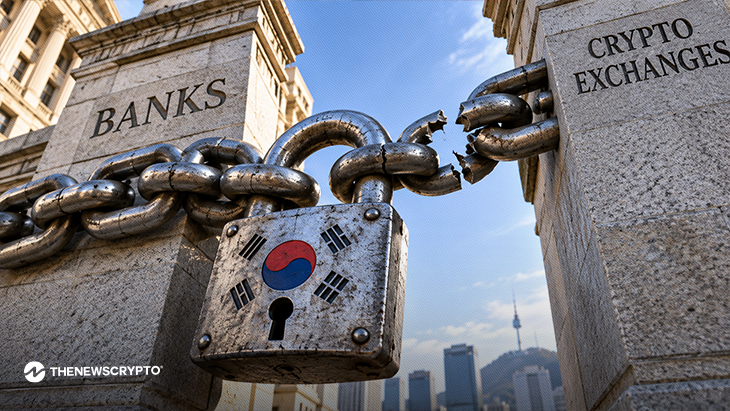
- South Korea’s FSC plans to tighten cybersecurity requirements after finding deficiencies at 130 of 555 financial companies reviewed.
- Around 100,000 pieces of customer information, including names, contact details and identification numbers, were exposed across affected firms.
South Korea’s Financial Services Commission has announced plans to tighten cybersecurity requirements across the country’s financial sector after an industry-wide review uncovered more problems than anyone wanted to find. A regulatory review of 555 financial companies revealed cybersecurity deficiencies in 130 of them, nearly one in four.
In addition, approximately 100,000 pieces of customer information were exposed across the affected firms. This included names, contact details, and identification numbers. The review was triggered by security incidents at 16 financial companies, including cryptocurrency exchanges.
Among the affected firms are Streami, the operator of crypto exchange Gopax, and crypto trading platform Prabang. Both previously disclosed that an October 2 hack exposed personal information belonging to some of their customers.
The FSC is still investigating whether attackers used artificial intelligence in these incidents and whether the same group carried out the attacks across multiple firms.
What the Proposed Rules Actually Say?
The FSC is not proposing minor adjustments. The reforms, if implemented, would represent a meaningful shift in how financial institutions and crypto firms are held accountable for their security posture.
The new standard would require larger financial institutions to undergo vulnerability assessments at least twice every year, up from the current frequency. The regulator also plans to strengthen information-sharing systems across the industry. Besides, threat intelligence moves faster between firms and regulators when incidents emerge.
For smaller companies, the FSC is considering using artificial intelligence in security monitoring. It is an acknowledgement that not every firm has the internal resources to run sophisticated threat detection independently.
One of the more significant additions is a proposal to allow cybersecurity inspections outside the regular assessment schedule when urgent threats emerge. That flexibility matters because attacks don’t follow a calendar. The current framework of scheduled reviews has clearly left gaps that bad actors were able to exploit.
The proposed reforms also include stronger accountability for executives. It is a signal that the FSC views cybersecurity failures not just as technical shortcomings but as governance failures that leadership should answer for.
Holding executives directly accountable for security gaps raises the stakes significantly for how seriously boards and senior management approach cybersecurity investment and oversight. Furthermore, for the crypto exchanges operating in South Korea, more frequent assessments and executive accountability requirements mean compliance costs go up.
Crypto Market Highlights
Circle’s USDC Leads 45 EU E-Money Tokens With Landmark MiCA Classification