


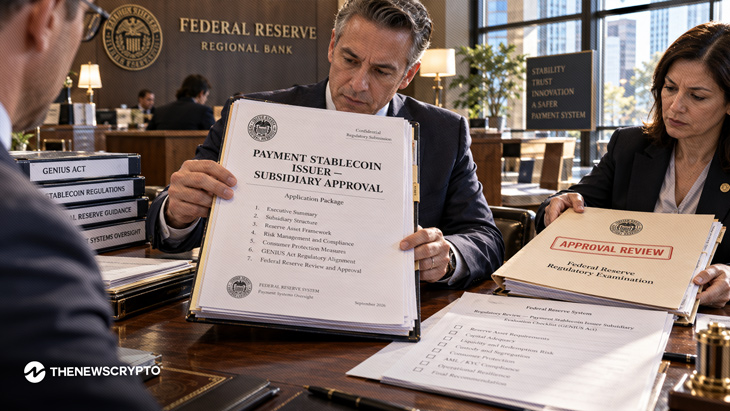
- The Federal Reserve has outlined rules mandating that all supervised stablecoin issuers must fully back payment tokens with permitted reserve assets.
- Another proposal outlines an approval process for insured state member banks that wish to establish stablecoin-issuing subsidiaries.
The Federal Reserve is now on the next step towards issuing stablecoin rules in the U.S. under the GENIUS Act. The Board has issued two proposals on September 24 regarding the issuers and bank subsidiaries. In the first proposal, the reserves, capital, risk management, and safeguards are being looked into. Fed-supervised issuers will have to hold sufficient assets to back the outstanding payment stablecoins.
Reserve-eligible assets shall consist of short-term US Treasury bills.
The new regulation would also set out standard capital requirements for credit and operational risks. The issuers would be subject to standards related to their risk management with regard to stablecoin operations. There would also be standards for Fed-supervised companies that hold reserve assets used to back payment stablecoins. The Fed would also delineate activities related to stablecoins that could be conducted by supervised banks.
Insured State Member Banks Require an Additional Process for Approvals
The second proposal is aimed at insured state member banks seeking stablecoin approval through subsidiaries. The applicant would be the bank, not the subsidiary being proposed. Documents would be provided to prove the business plans, financial position, and any other pertinent information regarding the activities being conducted by the applicant.
This process would involve informing the applicant whether the application is complete within 30 days after submission. The proposal would provide additional details of how the information can be improved if the application is incomplete. The GENIUS Act allows the Fed 120 days to make a decision after a substantially complete application has been submitted. However, the proposal covers issues related to changes in ownership, financial standing, and any changes to the proposed issuer’s business plan.
Public Comments May Still Impact the Final Rulemaking Framework
The suggestions are still open for comments and may yet be changed before becoming final rulemaking by the Federal Reserve. The commenting period will end 60 days from the publication date on the Federal Register. This move is consistent with the federal moves towards enforcing the provisions of the GENIUS Act. The Department of the Treasury, among other banking regulatory bodies, will independently formulate rules concerning stablecoin issuers and other requirements. The GENIUS Act sets up the legal framework, while the relevant agencies will have to formulate the operational guidelines.
Highlighted Crypto News:
Jetking Bitcoin Strategy Faces Scrutiny Ahead of AGM After SAT Ruling