


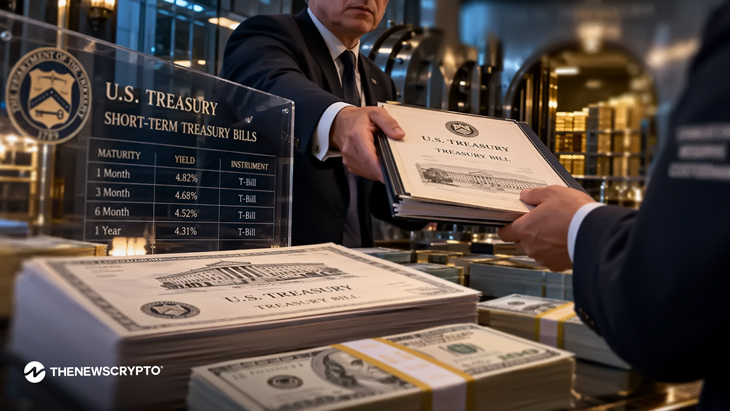
- US agencies may partner with private firms to expand dollar-denominated stablecoins overseas.
- The effort could support dollar demand and increase interest in US Treasuries.
The US government is weighing a coordinated push to promote dollar-denominated stablecoins overseas, not as a crypto initiative, but as a strategic move to reinforce the dollar’s status as the world’s reserve currency and drive demand for US Treasuries.
The effort could involve the Treasury Department, the State Department, and the US International Development Finance Corporation working alongside private sector firms through joint ventures. The DFC, overseen by Ben Black and tasked with advancing US foreign policy objectives through private partnerships, is among the agencies being considered for involvement.
Moreover, China is pushing its digital yuan through Project mBridge. The European Central Bank is advancing a digital euro and this week launched a project linking blockchain markets with existing European payment infrastructure.
Why Stablecoins Make Strategic Sense?
Stablecoin issuers typically back their tokens with cash and short-term US Treasuries. The global stablecoin market cap stood at approximately $302.8 billion as of September 2026, with 99.4% of that total in dollar-pegged tokens. Tether alone reported reserve assets of $187.7 billion at the end of Q2 2026, with the bulk sitting in short-term US government debt.
In addition, the expanded overseas adoption does not just extend dollar dominance; it directly increases issuer demand for US Treasuries.
The Genius Act, signed into law by President Trump last year, already established a federal framework requiring stablecoin issuers to hold dollar and short-term Treasury reserves. Also, the Treasury Secretary Scott Bessent has publicly stated that stablecoin growth could strengthen the dollar’s reserve currency role.
The Adoption Gap Still Exists
A Visa survey of over 2,000 US consumers found that more than half, 56%, have never heard of stablecoins. Among those who have, many assume they fluctuate like Bitcoin. Furthermore, the trust signals are there when the right institutions are involved.
Willingness to use stablecoins rose from 36% to 45% when offered through an existing financial provider. It jumped to 56% when bank-level fraud protection and deposit insurance were added to the hypothetical. Nearly two-thirds of consumers said trust depends more on who offers a payment method than on the technology itself.
Significantly, Washington is not regulating stablecoins; it’s starting to deploy them. Whether the joint venture model gains traction will depend on execution. Dollar stablecoins are becoming part of US foreign economic policy.
Crypto Market Highlights