

- Sweden’s Riksbank wants lawmakers to prepare legislation for a possible digital krona.
- The central bank estimates implementation would take at least five years, excluding legal changes.
- The ECB plans a digital euro pilot in the second half of 2027 and targets readiness for possible issuance in 2029.
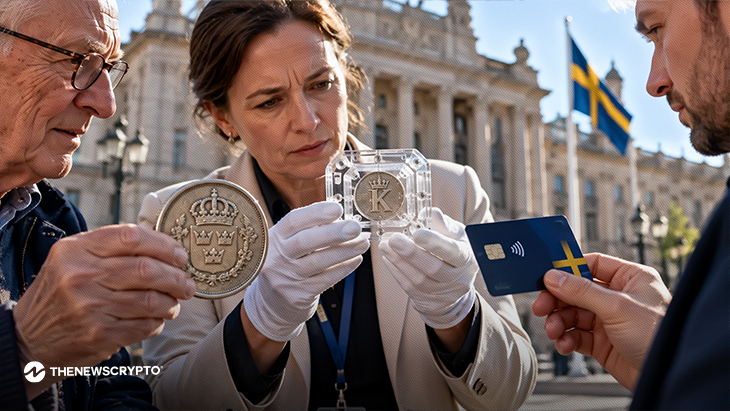
Sweden’s central bank has renewed its push for a possible digital version of the Swedish krona, asking lawmakers to begin preparing the legislation needed to introduce one. The Riksbank’s recommendation comes as the European Central Bank (ECB) advances its digital euro project and concerns grow over the use of foreign-currency stablecoins for payments.
In a letter to parliament’s Finance Committee dated October 7 and published on October 15, the Riksbank said recent developments in the payments market had brought the question of a digital krona back into focus. The central bank has not called for an immediate launch, and no final decision has been made on whether Sweden should issue the currency.
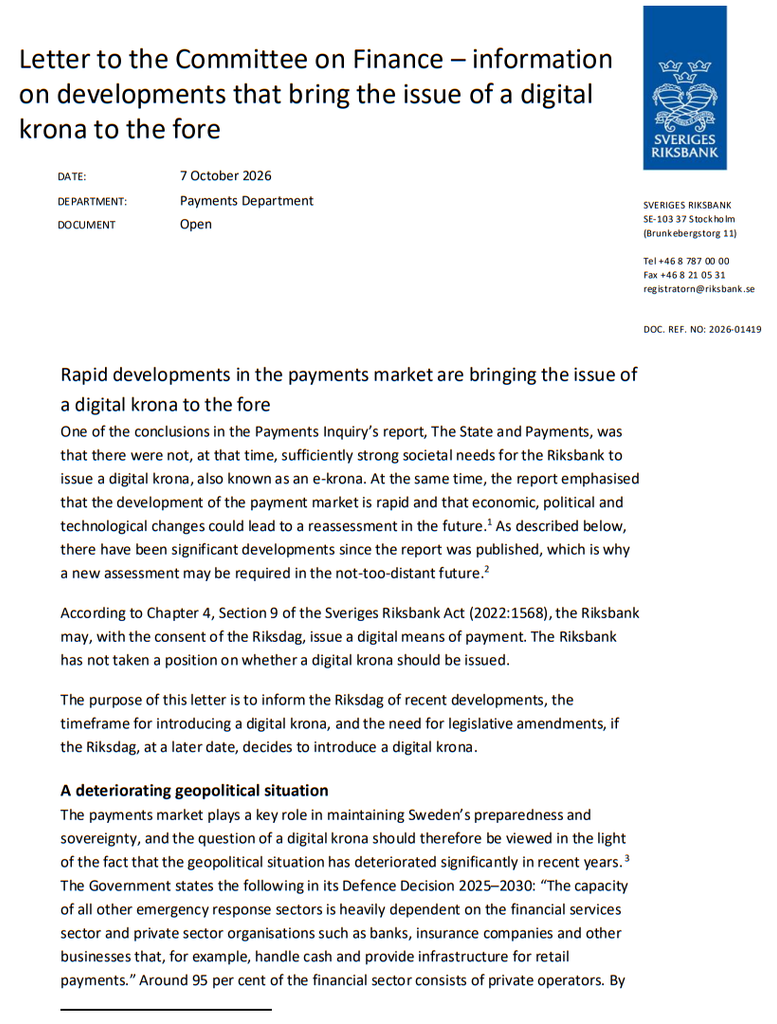
The renewed push follows a 2023 government inquiry that found insufficient societal need for a state-issued digital krona at the time. However, the inquiry also acknowledged that changes in technology, the economy and international developments could justify a fresh assessment.
The Riksbank now argues that Sweden should prepare the legal groundwork before deciding whether to proceed. It estimates that developing and introducing a digital krona would take at least five years, excluding the time needed to change existing legislation. Starting preparations early would give parliament the option to act if circumstances make the currency necessary.
ECB’s Digital Euro Plans Add Pressure for Sweden to Act
The ECB’s plans are a central part of the Riksbank’s reassessment. The euro-area central bank intends to run a 12-month digital euro pilot beginning in the second half of 2027, involving 36 selected payment service providers, merchants and staff from the ECB and national central banks.
The ECB aims to be ready for a possible first issuance in 2029, provided the EU’s digital euro legislation is adopted. That date is a target rather than a confirmed launch, as the ECB has said it will decide whether to issue the currency only after the legislation is approved.
The Riksbank has warned that a digital euro could affect the competitiveness of Sweden’s payment system if digital payment infrastructure develops around the euro without a comparable option for the krona.
Foreign-currency stablecoins are another concern. The central bank said wider use of tokens pegged to currencies such as the US dollar could eventually put pressure on the Swedish krona’s role in domestic payments, although it considers the immediate risk limited.
For now, Sweden is preparing for a possible future decision, not announcing a digital currency launch. Any introduction would require parliamentary approval, legal changes and several years of development.