


- Stablecoin supply decreased by about USD 10 billion from its May peak.
- Transaction volume was reported at USD 1.79 trillion in June.
- Even with the reduced supply, the use of stablecoins continued to be robust.
The world of stablecoins is at a stage where usage seems to be more significant than the amount of supply of the coins. As mentioned in Forbes, the stablecoin sector has experienced its largest monthly fall in 2022 since the crash of Terra-Luna, although the level of transactions has never been higher before.
The stablecoin market value dropped by USD 7.7 billion in June, which resulted in a decrease in the overall market value by around USD 10 billion from the maximum point in May to USD 300 billion. Even amid a decreased supply, the adjusted transaction volume increased to a historic USD 1.79 trillion, up 63% compared to May and 125% year-over-year.
Transaction Velocity Surpasses Supply of Stablecoins
The market cap analysis demonstrated that the USDT supply dropped from USD 190 billion to USD 184 billion. While the USDC supply decreased from USD 80 billion to USD 74 billion. The decrease in the total market cap was only 3%, which is way less compared to the drastic fall after the collapse of Terra during 2022.
As Forbes highlighted, this new relationship between the supply of stablecoins and their usage is a notable development for the industry. Previously, stablecoins were mostly held as collateral while trading. But now people are holding them and using them as payment tools rather than leaving their holdings idle.
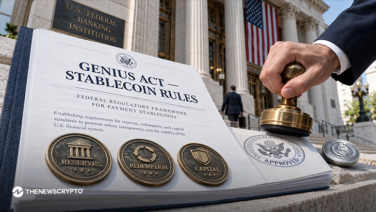
Regulation played a role in the way capital was distributed as well. The signing of the GENIUS Act in July 2025 banned yield from payments stablecoin providers. Thus driving people to invest their idle holdings into treasury tokens, which brought returns and reached close to USD 16 billion in asset management.
Payments Become the Growth Indicator of Choice
The report also emphasized changes in the relationship between the main stablecoin issuers. In 2025, USDC had transaction volume amounting to approximately USD 18.3 trillion. Which was more than that of USDT with USD 13.3 trillion despite a lower circulation. Today, businesses comprise the bulk of the real-world stablecoin transactions through business-to-business payments, payroll, remittances, and capital markets settlement due to increased transaction velocity.
The report further indicated that adjusted transaction volume gives a clearer perspective than blockchain transfers. Since it excludes exchange shuffling and wash trading. Today, Visa and Mastercard emphasize settlements, focusing more on transaction volumes and payments as indicators of stablecoin success than market capitalization.
Highlighted Crypto News:
Binance Pays $0.50 USDC Dividend to ORC Shareholders Through Binance Stocks