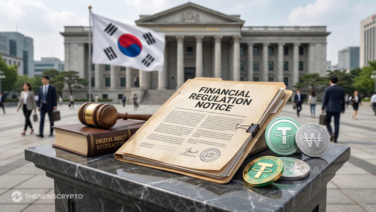




- KBank files trademarks linked to stablecoin and wallet services.
- The move comes as the bank prepares for a public listing.
- Traditional banks in Asia accelerate crypto and digital asset integration.
South Korean digital bank KBank, also known as a “big partner” of Upbit, has filed trademarks related to stablecoin and crypto wallet services. This is particularly interesting as the bank is soon to go public with its initial public offering.
The filing of trademarks indicates that KBank is planning to move from traditional fiat currency banking to digital infrastructure. This move is consistent with the development of the stablecoin market and the adoption of crypto banking services, where banks compete to offer blockchain payment services.
KBank is already an essential part of the crypto market in Korea. The bank offers real-name bank accounts for users of Upbit, which is a requirement for any exchange operation.
Stablecoin Wallets Fit the Bigger Strategy
The filing of trademarks for stablecoin wallets by KBank indicates that the bank is planning to develop services that will connect traditional deposits with digital currencies. Stablecoins enable people to transfer money on a blockchain without being affected by price volatility.
Banks view stablecoins as the logical next step in digital payments. They can leverage the best of both worlds: compliance and blockchain technology. They also provide banks with a direct connection to cryptocurrency users, rather than just through exchanges.
The trademark applications demonstrate planning and not mere coincidence. It is common practice for firms to establish trademarks before introducing new financial services.
IPO Ambitions Drive Innovation
KBank seeks to attract investors on public markets. A well-defined digital asset strategy can enhance its growth story. Fintech-savvy investors tend to favor banks that are at the forefront of technology adoption.
International news sources such as Reuters Markets Asia and Bloomberg Markets often report on Asian banks using blockchain technology to remain competitive.
KBank’s crypto friendliness could enhance its valuation story. Investors seek new sources of revenue beyond existing lending spreads.
Regulatory Landscape Shapes the Move
South Korea has strict regulations for cryptocurrencies, such as real-name authentication and banking regulations. KBank adheres to these regulations, which enhances its credibility with the authorities.
Stablecoin-related services may still encounter policy barriers. Governments around the world are engaged in discussions about reserve requirements, consumer protection, and international money flows. KBank has to walk the tightrope between innovation and regulation.
However, the trademark filings indicate optimism. The bank probably believes that regulatory conditions will become clearer and not more restrictive.
What This Means for Crypto and Banking
The KBank developments illustrate the changing nature of financial services. Banks are no longer viewing crypto as an external industry. They are designing services around blockchain infrastructure.
If KBank proceeds with the development of stablecoin wallet services, it may further integrate banking apps with crypto markets in Korea. Other banks in the region may also adopt similar services to prevent losing younger, more tech-savvy customers.
The development is also a further endorsement of Upbit’s ecosystem, which may become more streamlined with tighter banking integration.
Digital finance and traditional finance are increasingly blurring. The KBank trademark filings are just another step in this process.
Highlighted Crypto News: