


- ASTER dropped approximately 32.5%, from $0.7124 to $0.4812, within around 15 minutes on November 16.
- Aster CEO Leonard Leung suspects potentially malicious liquidations, while the investigation continues and futures volume rises 121% to approximately $1.29 billion.
Aster’s native token ASTER experienced a sharp price reversal on November 16, falling more than 32% within approximately 15 minutes after briefly climbing above $0.71. The sudden move prompted Aster CEO Leonard Leung to launch an investigation into what he described as potentially malicious liquidations of highly leveraged trading positions.
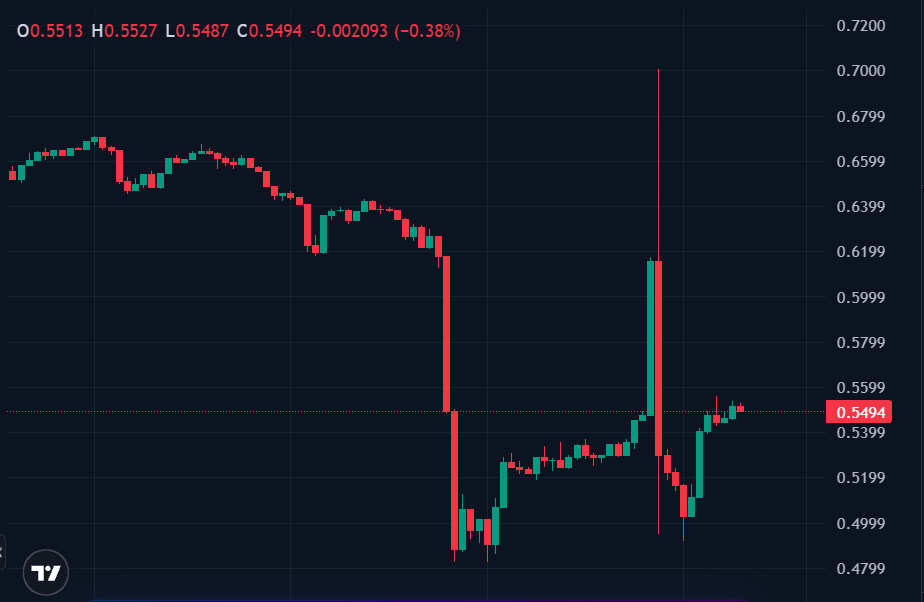
ASTER climbed from around $0.55 to an intraday high of $0.7124 before dropping to approximately $0.4812. The token later recovered some of its losses and traded around $0.55, although its price continued to fluctuate.
Leung addressed the unusual movement in a post on X, saying the team had noticed abnormal price activity and was investigating the cause. He attributed the volatility to liquidations involving highly leveraged positions, which he described as “likely malicious.”
🚨 JUST IN: aster-2:native price surged nearly 42% to $0.70 within an hour before plunging almost 30% to $0.4919 in just 15 minutes. Aster CEO says the project is investigating the abnormal price movements, attributing the volatility to liquidations of highly leveraged positions that were likely malicious. #ASTER #CryptoNews #Altcoin
— TheNewsCrypto (@The_NewsCrypto) November 16, 2026
The CEO also said Aster’s operations were continuing normally and rejected suggestions that the price movement was connected to market-making arrangements. He stated that the company had no such agreements with market makers.
Futures Trading Activity Surges During ASTER Price Swing
The sharp price movement coincided with increased activity in the derivatives market. CoinGlass data showed ASTER futures trading volume reaching approximately $1.29 billion over 24 hours, representing a 121% increase from the previous day. Spot trading volume stood at around $118.3 million, up 67%.
Tracked liquidations reached approximately $9.1 million, including $5.97 million in long positions and $3.14 million in short positions. Long liquidations occur when leveraged bullish trades are automatically closed after prices move against traders.
However, the available figures do not establish whether all these liquidations were connected to the unusual price movement.
Aster has not disclosed the accounts or positions involved, the total losses suffered by traders or whether its insurance fund was affected. Leung said the team would publish further details in upcoming reports but did not provide a specific date.
ASTER’s movement comes as the platform continues to operate its decentralized exchange, which offers spot trading and leveraged perpetual futures. The investigation’s findings could provide further clarity on what triggered the sudden reversal and whether changes to its risk-management systems will follow.