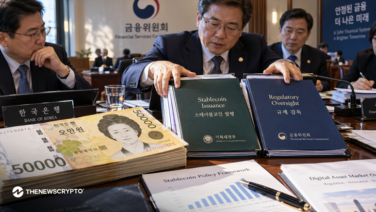


- South Korea’s FSC plans to issue a conditional no-action letter allowing exchanges to suspend deposits and withdrawals when hacking is suspected, even before a breach is confirmed.
- The regulator is pushing for 24/7 security monitoring, stronger cold-wallet protection, higher compensation provisions and stricter inspections.
South Korea’s Financial Services Commission (FSC) allows cryptocurrency exchanges to suspend customer deposits and withdrawals when a hacking attempt is suspected, without waiting for confirmation that customer assets have been stolen.
The regulator announced the measure on November 12 after holding a security meeting chaired by Vice Chairman Shin Jin-chang in Seoul. It plans to issue a no-action letter allowing exchanges to take preventive action under specified conditions. The move is intended to address uncertainty under existing rules, which generally restrict exchanges from blocking transactions without legitimate grounds.
🚨 JUST IN: South Korea’s Financial Services Commission will allow crypto exchanges to suspend deposits and withdrawals when a hack is suspected, without waiting for a confirmed breach. The FSC plans to issue a no-action letter permitting exchanges to take preventive measures under specified conditions. The regulator also plans to strengthen 24/7 security monitoring, cold wallet storage and exchange security inspections. #SouthKorea #FSC #CryptoRegulation
— TheNewsCrypto (@The_NewsCrypto) November 12, 2026
FSC Pushes for 24/7 Monitoring and Stronger Wallet Security
The regulator is also calling for exchanges to maintain security monitoring and incident-response systems around the clock, in line with the cryptocurrency market’s continuous trading activity. Exchanges must have responsible personnel available to respond immediately when unusually large transactions or other suspicious activity are detected.
Platforms that cannot operate a continuous monitoring system will be expected to process deposits and withdrawals only during hours when their security arrangements are functioning normally. They must inform customers about these hours in advance and maintain enough staff to handle transaction requests.
The FSC also wants exchanges to increase the proportion of customer assets held in cold wallets, which keep private keys offline and reduce exposure to online attacks. Current regulations require at least 80% of customer crypto assets to be stored this way, while the industry-wide ratio already exceeds 95%.
Exchanges are also being asked to keep hot-wallet balances at the minimum needed for regular transactions and strengthen insurance coverage and financial reserves to compensate customers affected by security incidents.
The regulator plans to expand security inspections through the Financial Security Institute. Only five of South Korea’s 28 registered virtual asset businesses are currently members. The institute will update its exchange-specific inspection standards by the end of 2026.
Separately, the upcoming Digital Asset Law is expected to introduce IT security obligations and compensation responsibilities for crypto businesses comparable to those imposed on traditional financial institutions.