



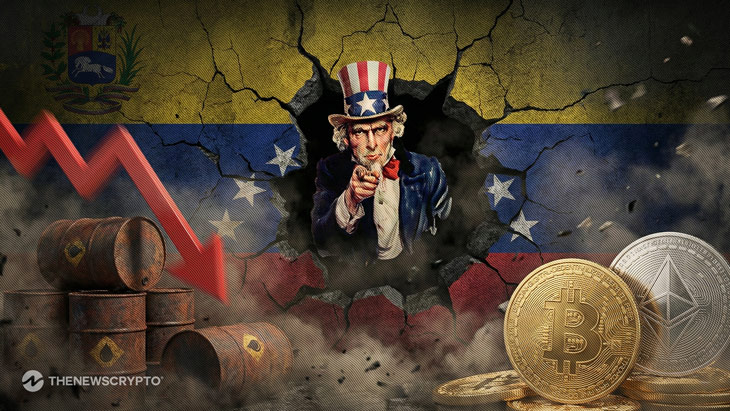
- The U.S. intervention in Venezuela and the arrest of Venezuelan President Nicolás Maduro occurred in tandem with plummeting worldwide oil prices.
- Bitcoin was hovering around crucial levels, and it showed little response to geopolitical events.
The capture of Venezuelan President Nicolás Maduro by the U.S. over the weekend led to dramatic market movements in the conventional market, but the cryptocurrency market was relatively stable. This comes at a time when the oil prices have plummeted to multi-year lows, amid forecasts of higher supply.
According to U.S. officials, the operation is a law enforcement operation in connection with superseding indictments charging drug trafficking and corruption against President Maduro, as well as other high-ranking officials in his government. It is reported that this week, President Maduro is scheduled to make his initial appearance in federal court sitting in Manhattan. This marks a critical point in the relationship between Venezuela and the United States.
Oil markets were some of the most rapid responders. Future markets for West Texas Intermediate crude fell to depths of about $56.6 per barrel, their lowest levels since the beginning of 2021, as markets considered the possibility of a second access to Venezuela’s massive energy resources under American supervision.
The equities market echoed this line, with shares in Chevron surging 11%. While not exclusively a reaction to Venezuela, the surge was largely seen as a function of investor speculation that a forthcoming shift in the political situation in Venezuela would make further oil and then oil exports possible.
Crypto Markets Indicate a Shift in Structure
On the contrary, the cryptocurrency markets had a stable performance. Bitcoin and Ethereum saw an increase of almost 1%, and the total cryptocurrency market capitalization increased close to 2% at $3.2 trillion, as per data from CoinGecko. It indicates that cryptocurrencies are becoming less vulnerable to geopolitical events that have affected commodities and equities in the past.
Participants in the market maintain that this is a reflection of the increasingly global and decentralized base of cryptocurrency investors, as well as its growing importance within regions affected by financial restrictions. Rather, it would seem that the markets ignored this occurrence and saw it as something not relating to them.
Sanctions History Keeps Crypto Central in Venezuela
Venezuela has had a relationship with cryptocurrency even before the most recent events. There have been sanctions, a weaker currency, as well as certain banking restrictions that have made stablecoins a rational replacement for dollars. Apart from all the civilian usage, this is where blockchain intelligence firms and former officials have charged crypto with being used in state-linked commodity transactions, including oil sales settled outside the traditional financial system. While most of these charges have never been officially acknowledged, they point to crypto’s function as a parallel settlement mechanism during periods of restricted access to global finance.
Earlier attempts at solidifying this vision, like the state-backed petro cryptocurrency launched in 2018, ultimately failed. In the intervening period, though, stablecoins have inched into daily economic life, bolstering crypto’s long-term prospects. The Venezuelan arrest of Nicolás Maduro changes the outlook on the energy markets and on the markets of equities, but the stable crypto markets show the change in the environment. Cryptocurrency markets, in the Venezuelan environment, have gone from being the band-aid of the financial system to being the financial part of the Venezuelan environment, shaped by the sanctions and isolation experienced by the country.
Highlighted Crypto News: