

- Tenev claims that tokenization can facilitate real-time settlement, trading 24/7, portability, and self-custody.
- On-chain tokenized equity trading amounted to $9 billion in 2026.
Robinhood CEO Vlad Tenev notes that markets globally are now entering the early stages of what will become a tokenization supercycle. According to The Kobeissi Letter, on-chain tokenized equity trading amounted to $9 billion in 2026, growing by over 207% quarter-over-quarter and 800% year-to-date. “Tokenization does not mean listing securities on blockchains; it means building new ownership infrastructure from scratch,” Tenev added. Robinhood Chain has facilitated over 100 million transactions, thus becoming the fastest EVM chain to reach that milestone. Exposure is provided to more than 190 US equities across 120 countries in a 1:1 ratio with underlying stocks.
America must continue to lead. https://t.co/WUOJHfOWGE
— Vlad Tenev (@vladtenev) August 18, 2026
Real-Time Settlement and 24/7 Trading Become Prominent
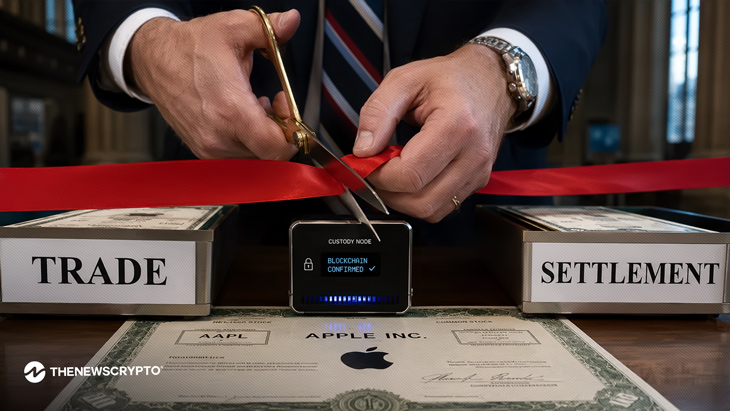
According to Tenev, one of the major benefits blockchain technology can provide to American investors is the real-time settlement of transactions. Traditional exchanges utilize intermediaries to handle risks from execution to settling trades. Stock Tokens may help to trade, settle, and move securities in real time, thus relieving the pressure from settlements. Additionally, Tenev mentions continuous trading as another possible benefit of tokens. Global investors react to information beyond regular hours of the U.S. market.
Robinhood currently offers 24/5 trading with the help of traditional infrastructure, building its way towards a 24/7 approach. Blockchain networks will allow continuous trading and fractional ownership without using many traditional platforms. “24/7 trading is not only about capturing opportunities; it is about risk management as well,” Tenev says. Tokenization may also enhance asset portability across financial services platforms and decentralized finance applications. Self-custody will increase investors’ power, while allowing assets in tokens to lend and serve as collateral.
Regulation Remains Paramount in U.S. Adoption
Though technology has made progress, according to Tenev, there is a need for modernization of regulations as well as blockchains in the U.S. adoption of blockchains. Securities rules have been developed through financial market infrastructure that is more than a century old. According to him, regulators may keep the benefits of investor protection even as they work to develop new regulations.
This includes the use of blockchain technologies in market infrastructures. Robinhood recognizes potential in assets that lack broad liquidity and access, including private company stocks. Even though accredited investor rules limit many Americans’ access to the asset, private company stocks are seen as an area where tokenization infrastructure can be applied in the future. Public equities, in his view, form the basis of broad tokenization.
Highlighted Crypto News: