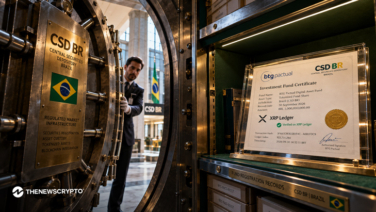



- Settlement utilizing Circle’s USDC, Paxos’s PYUSD, USDG, and USDP, Ripple’s RLUSD, and SoFiUSD will initially be supported by Mastercard.
- There will be constant value transfers and settlements thanks to Mastercard’s new structure, which brings the network one step closer to an always-on approach.
One step toward further integration of blockchain-based payments into the infrastructure of the global financial system might be Mastercard’s decision to extend its settlement network to accommodate regulated stablecoins.
Intraday, weekend, and holiday settlement, in addition to onchain settlement utilizing regulated stablecoins, would be available to issuers and acquirers, according to the company’s announcement on Wednesday. In order to provide financial institutions with more leeway in managing liquidity, the new capabilities will function in tandem with current fiat settlement procedures.
Pushing for 24/7 Payment Settlements
Settlement utilizing Circle’s USDC, Paxos’s PYUSD, USDG, and USDP, Ripple’s RLUSD, and SoFiUSD will initially be supported by Mastercard. Many blockchain networks will support the stablecoins, including XRPL, Ethereum (ETH), Polygon (POL), Base, Arbitrum (ARB), and Solana (SOL).
A more fundamental change is taking place in the financial markets, even if the statement seems technical at first glance. In the past, card transactions were approved quickly. However, due to banking hours, settlement between banks and payment providers sometimes happens later in batches. There will be constant value transfers and settlements thanks to Mastercard’s new structure, which brings the network one step closer to an always-on approach.
According to Raj Dhamodharan, Mastercard’s executive vice president of blockchain and digital assets, the practical applications of stablecoins will determine their future level of acceptance. This is particularly true in the settlement process, where concerns about timeliness and liquidity are paramount.
The importance goes beyond only the money. Stablecoins’ primary usage has always been in the cryptocurrency trading market, but they are now also being considered as settlement assets by banks, payment companies, and asset managers due to their ability to facilitate immediate cross-border money transfers that do not adhere to regular banking schedules.
As more and more financial institutions and payment networks strive to update their settlement infrastructure, competition is heating up, prompting this deployment. Stablecoin issuers like Circle, Ripple, and Paxos are trying to pitch their products as a replacement for the traditional correspondent banking system for foreign payments and treasury transactions.
Highlighted Crypto News Today:
Robinhood Enters Canadian Crypto Market With WonderFi Acquisition